Keloid & hypertrophic scar treatment in Ireland
Raised scars can be treated. Not erased, but genuinely improved.
Keloids and hypertrophic scars itch, hurt and affect how people feel about being seen. This site explains what they are, why they form, and what each treatment can realistically do — written by Dr David Buckley of the Kerry Skin Clinic in Tralee.
Appointments by phone on 066 7174066 or email reception@kerryskin.ie
 Before
 After
 Before
 After
First in Ireland
Dr David Buckley was the first doctor in Ireland to offer intralesional cryosurgery for keloids and hypertrophic scars.
Since 1989
Community-based dermatology in Tralee, now at purpose-built premises on Ashe Street.
Hundreds treated
Hundreds of keloids and hypertrophic scars treated at the clinic, with patients followed up at seven, thirteen and fifteen years.
Two kinds of raised scar
They look similar and they are often confused, but they behave differently — and that changes what treatment is likely to work.
Keloids
Spread beyond the edges of the original wound and can keep growing long after the skin has healed. They rarely fade on their own.
Most common on the upper chest, upper back, shoulders, ears and cheeks.
Hypertrophic scars
Stay within the boundary of the original wound. They often settle by themselves over time and are generally easier to treat.
Most common after surgery, burns and other skin trauma.
Which treatment is likely to suit your scar?
Four questions, based on the guidance in Dr Buckley’s own patient information. Nothing you enter is stored or sent anywhere.
Roughly how big is the scar?
Measure the longest edge. An estimate is fine.
Treatments
Each of these has its own page setting out how it works, who it suits, and what recovery involves. Click any box for more details.
Intralesional cryosurgery
Freezing the scar from the inside out with a probe placed into the scar tissue. Dr Buckley was the first doctor in Ireland to offer it for keloids.
Best for: Medium and large keloids, 1–3cm
More details →
Steroid injections
The usual first-line treatment for small, recent keloids and hypertrophic scars. Quick, non-surgical, no downtime.
Best for: Small scars under 1cm, less than 2 years old
More details →
Silicone sheets
Non-invasive, available over the counter, and most useful early — while a scar is still forming.
Best for: Preventing a scar progressing; small scars under 2 years old
More details →
Cryosurgery
Freezing scar tissue with liquid nitrogen at −196°C. Dr Buckley is internationally recognised for his work in cryosurgery.
Best for: Small to medium scars, up to 2cm
More details →
Radiosurgical excision
Removing scar tissue with ultra-high frequency radio waves under local anaesthetic. Always followed by another treatment to prevent recurrence.
Best for: Keloids with a narrow base
More details →
Combination treatments
Most good results come from combining treatments rather than relying on any single one. Here is how they are paired, and why.
Best for: Most scars, particularly larger or recurring ones
More details →
Laser
Reduces the redness, pain and itch in a scar. It does not usually make the scar smaller, so it is rarely used on its own.
Best for: Red, itchy scars on lighter skin
More details →
Imiquimod cream
An immune response cream used after a keloid has been removed, to reduce the chance of it growing back.
Best for: After surgical removal of a keloid
More details →
Cosmetic camouflage
Medical-grade makeup that conceals a scar. It does not treat the scar, but it works immediately and it is free through the Irish Red Cross.
Best for: Small flat scars, and residual marks after treatment
More details →
Before & after
Real cases from the clinic
Ear keloids, acne keloids on the chest and face, keloids after a tattoo. Including a week-by-week sequence showing exactly what healing looks like.
Video library
Five presentations by Dr David Buckley
Talks on what keloids are, the treatment options, intralesional cryosurgery, combination treatment, and a case series on ear keloids.
Another skin, hair or nail problem?
The Kerry Skin Clinic treats all skin, hair and nail conditions, not only keloids and scars.
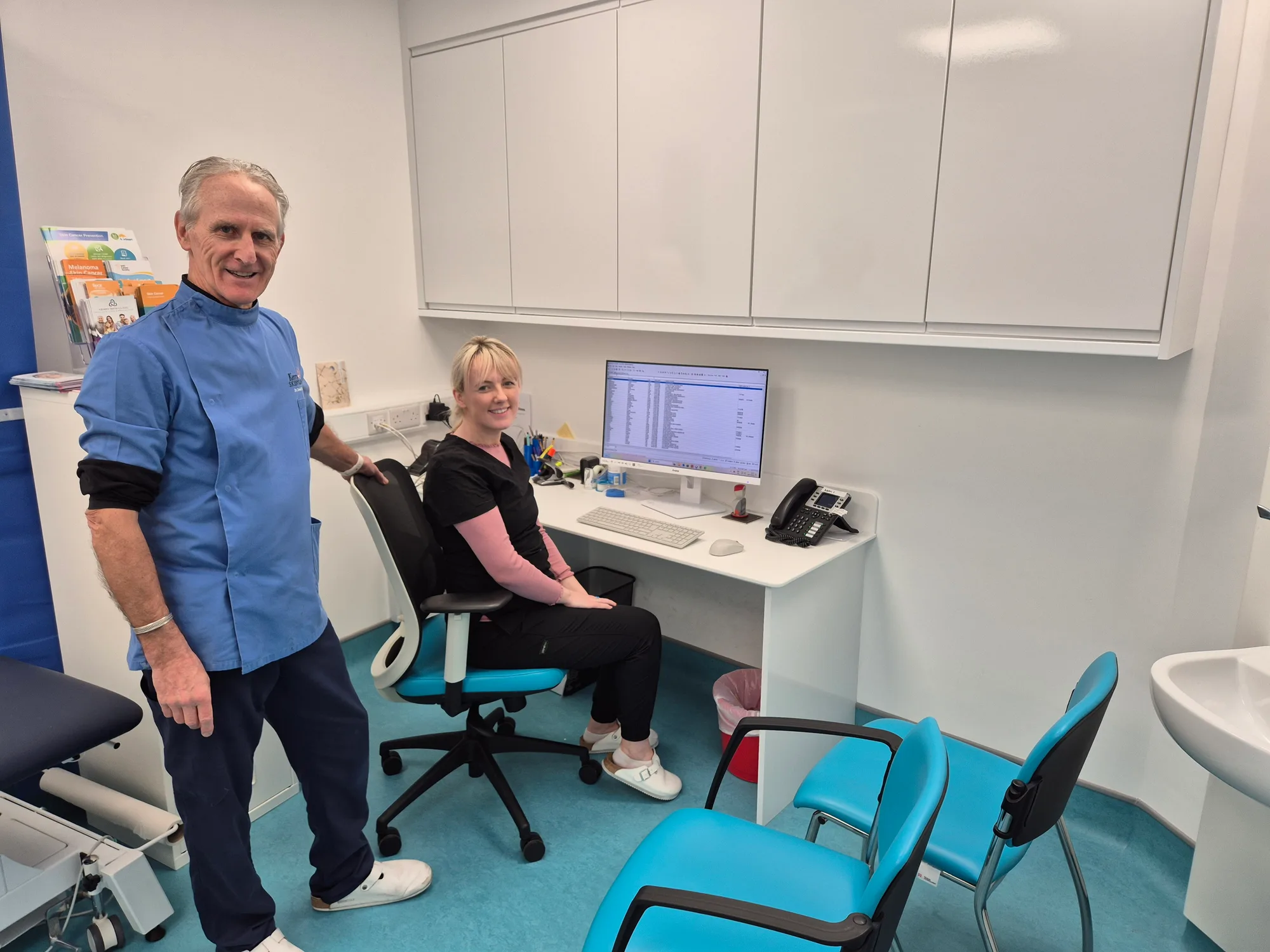
Dr David Buckley
Founding member and medical director of the Kerry Skin Clinic, on the specialist register of the Irish Medical Council, and providing community-based dermatology in Tralee since 1989.
Member of the International Society of Cryosurgery, the American College of Cryosurgery and the European Academy of Dermatology and Venereology. Honorary fellow of the Royal College of General Practitioners. Author of two books on primary care dermatology and contributor to two international textbooks on cryosurgery.